- New Money
- Posts
- Home
Home
Things to know before moving out on your own

Angelo Castillo
May 19, 2026

Happy Tuesday,
Angelo here! Welcome to New Money, where we go over weekly tips to help you build your wealth, one dollar at a time.
Today’s edition:
Things to figure out before moving out
The costs you should know about
Tariff cuts, Nasdaq falls and more…
Read time: 2 min 50 seconds
🍎Wealth Tip of the Week
People used to ask me when I was moving out.
I stayed home until I was 26.
And looking back it was one of the best financial decisions I ever made.
Moving out earlier isn’t wrong but I used that extra time to actually build something before I left.
The savings. The credit. The plan.
Moving out is exciting. It's a real milestone. But the financial side of it is way bigger than most people expect. The costs hit differently when you're actually living it versus planning for it in your head.
In fact, nearly one in three adults between 18 and 34 still live with their parents.

Map: NAHB Economics Source: 2024 American Community Survey
If you're in that in-between stage right now, living at home, thinking about moving out, wondering how people actually afford any of this, this one's for you.
1. Build Your Credit Before You Need It
You can save money perfectly and still get denied for an apartment or mortgage if your credit is bad. Start building it early.
Get added as an authorized user on a parent's credit card. If they have good credit their positive history shows up on your report immediately. Fastest credit boost available and it costs nothing.
Get your own credit card and keep it simple. One or two small purchases a month like groceries, gas, something you'd buy anyway. Pay it off in full every single month before the due date. Do this consistently and your score builds itself without you thinking about it.
Never miss a payment. Payment history is the single biggest factor in your credit score. One missed payment can stay on your report for years. Set autopay so it’s on autopilot.
Don't apply for too many cards at once. Every application is a hard inquiry on your credit. Too many in a short period signals risk to lenders. Build slowly and intentionally.
Good credit affects your approval odds, interest rates, and sometimes whether a landlord even rents to you.
Protect it like it’s money, because it is.
2. Know The Real Number Before You Start Looking
Here's the mistake that costs people the most time: finding a place they love and then figuring out if they can afford it.
Do it backwards.
Before you look at a single apartment or house, decide what monthly payment you can genuinely live with.
A good rule of thumb is the 30% rule. Don't spend more than 30% of your gross monthly income on rent or a mortgage.
Not the maximum a bank will approve but what you can actually handle long term when life gets in the way.
And remember: when you get a mortgage your monthly payment isn't just the loan amount.
It includes four things, the loan itself, the interest, property taxes, and home insurance. Together they're called PITI. When you talk to a lender make sure that total combined number is what fits your budget, not just the loan portion alone.
Once you have your number, then you start looking. I've been using Homes.com for this and it genuinely makes the search easier.

Their AI lets you search the way you actually think. You can literally ask for things like "find me a rental that's 30% of my $5,000 monthly income" and it pulls listings that actually fit your budget. No more scrolling through hundreds of places that are way out of range and getting emotionally attached to something you can't afford.
And then you can:
Talk to at least three lenders before you decide anything.
Get their estimates in writing and compare them.
The difference in rates between lenders can save or cost you tens of thousands over the life of a loan.
3. Know The Real Cost Before You Sign Anything
The national median rent for a one-bedroom apartment is around $1,510 a month as of 2026.
Most people see that number and do the math on their paycheck and think they're good.
But rent is never the only number.
Before you get your keys you're looking at:
Application fees. $50 to $100 per application, almost always non-refundable. Apply to two or three places max.
Security deposit. One full month upfront plus first month's rent. At $1,510 that's over $3,000 before you've slept there once.
Moving costs. Truck rental, movers, gas. This adds up faster than people expect. Budget for it.
Utilities. Usually not included. Electric, water, internet, so ask before you sign. Look for places with utilities included.
Appliances. Not every place comes with a fridge or microwave. Find out what's included before move-in day.
Move in at the start of the month. Move in on the 16th and you owe a prorated amount plus full rent again two weeks later. Start on the first and give yourself a full month before the next payment hits.
Before you sign anything on a home, use Homes.com to get the full picture.
You can ask it directly, “If I put $20K down on this listing, what's my true monthly cost?” and it breaks down everything including taxes, insurance, and fees.
And if you're using Homes.com you can literally ask it to connect you with the listing agent directly from the platform. No hunting for contact info, no back and forth.
The realistic target before you move: first month's rent plus security deposit plus at least $1,000 extra for the unexpected.
On average that's around $4,000 to $5,000 before you sign anything. If you don't have that cushion you're starting from behind before you even unpack.
4. Build The Deposit With What You Already Have
You don't need a magic income source to get there. You need to look at where your money is already going.
Cut one thing this month. Not everything. One subscription you barely use. Move that exact dollar amount to your HYSA the same day.
Sell what you're not using. Clothes, electronics, anything collecting dust. One serious weekend on Facebook Marketplace or eBay can put $200 to $500 in your account fast.
Give yourself more time if you need it. The math is simple, every month you're not paying rent is a month of savings going toward your actual goal. There is no timeline you're supposed to hit. There is only the one that sets you up to actually succeed.
Side hustle with a specific number. Not "make more money." Something concrete, I need $5,000 for my moving fund. Deliver food, freelance, tutor, resell. Work toward the target.
I stayed home until I was 26 and people thought I was behind.
Now I know I was just getting ready.
There is no single right timeline. There is only yours where it is built on the right foundation, at a number you can actually sustain, with a plan that doesn't fall apart the first time life gets hard.
Just make sure you're building in the right direction.
Where are you right now in your financial journey? |
💬Quote of the Week
Success is doing ordinary things extraordinarily well.
📉 Market Recap
Check out some of the biggest stories shaking up money, markets, and momentum this week.
👉U.S. and China signal tariff cuts after Trump-Xi summit
China and the U.S. are discussing lower tariffs and expanded agricultural trade after this week’s summit in Beijing, signaling easing tensions between the two countries.
Wallet Impact: Lower tariffs could reduce costs for food and goods over time, while helping trade and supply chains move more smoothly again.
👉SpaceX IPO could be highly volatile, analysts warn
As SpaceX prepares for a massive IPO, some analysts say the stock could swing heavily because of Elon Musk’s influence and the company’s extremely high valuation.
Wallet Impact: Big IPOs can create huge hype and fast price swings, which means investors chasing excitement could also face bigger risks.
👉Nasdaq falls as oil prices and Treasury yields climb
The Nasdaq and S&P 500 fell as rising oil prices and borrowing costs pressured tech stocks.
Wallet Impact: Higher oil prices can increase costs across the economy, while higher borrowing costs may keep loans, mortgages, and credit cards more expensive for longer.
👉Lululemon clashes with founder as brand struggles continue
Lululemon said talks with founder Chip Wilson broke down as the company faces falling sales momentum and rising competition from brands like Alo Yoga and Vuori.
Wallet Impact: Even big brands can lose momentum quickly when trends shift and competition increases, which is why investors watch brand strength closely.
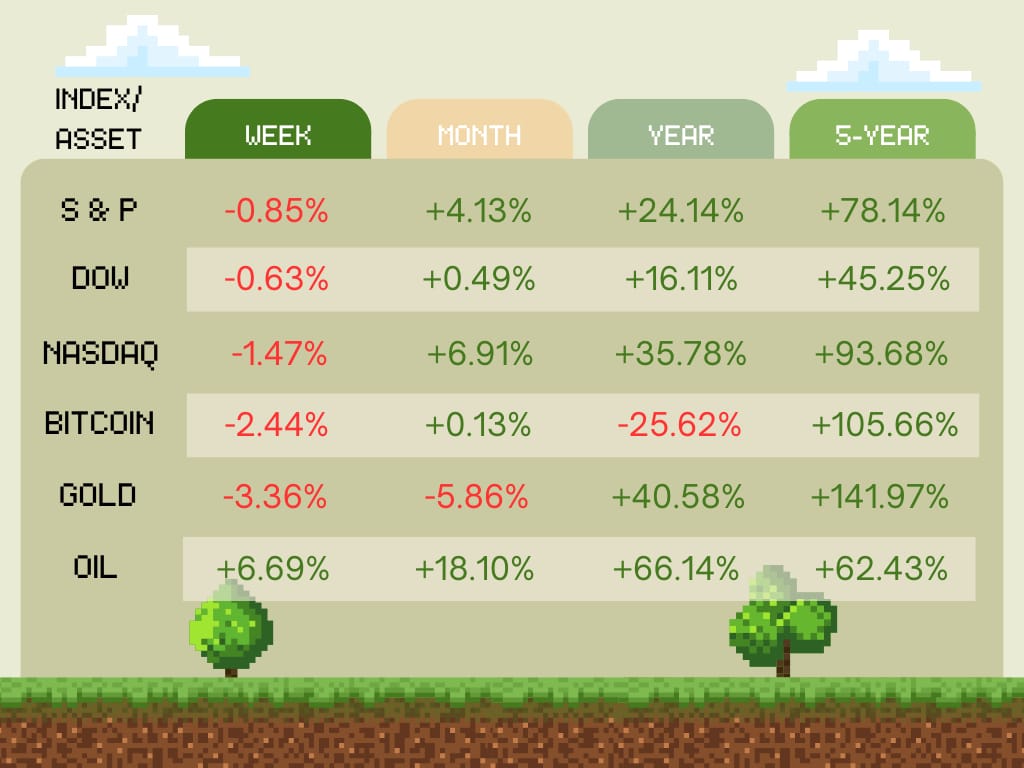
As of 05/18/2026
I want your honest take! Are you enjoying the market recap? |
👀 In Case You Missed It
I went from broke to building real wealth because of one mindset shift from this book.
Watch here ↓
🌱3 more ways I can help build your wealth
High-Yield Savings Account (HYSA): Most banks pay almost nothing on your savings. These HYSAs earn ~4% APY instead. Here are a few solid options I recommend if you want your cash to actually work.
My Youtube Channel: If you prefer learning visually, I walk through real-life examples, portfolio breakdowns, and beginner-friendly concepts step by step so they actually make sense.
Quick Survey (Help Me Help You): The more I understand you, the better I can guide you. It only takes 2 minutes to fill this out so I can help you create structure and build wealth with confidence.
See y’all next week 🫡
Angelo Castillo
How did you like today's newsletter? |
Disclaimer: The content of this newsletter is for informational purposes only and should not be construed as investment, legal, or tax advice. The views and opinions expressed herein are solely those of the author and do not necessarily reflect the views of any business, employer, or other entity. Investing involves risks, including the potential loss of principal. Past performance does not guarantee future results. Readers are advised to conduct their own research and consult with qualified professionals before making any investment, legal, or financial decisions. The information provided is believed to be accurate but cannot be guaranteed. The author and publisher disclaim any liability for actions taken based on the content of this newsletter. This newsletter is not an offer to buy or sell any security. By subscribing or continuing to read this newsletter, you acknowledge and accept these terms and conditions.
Some of the links are my affiliate links. If you click on these links and sign up/purchase something, I may earn a small commission at no additional cost to you. This helps support me and allows me to continue creating content for you. I only promote products and services I genuinely believe in. Thank you for your support!