- New Money
- Posts
- Freed
Freed
How to pay off debt faster and stop the cycle for good

Angelo Castillo
April 16, 2026
Happy Wednesday,
Angelo here! Welcome to New Money, where we go over weekly tips to help you build your wealth, one dollar at a time.
Today’s edition:
The system to get out of debt faster
Snowball vs avalanche (plug in your numbers)
Oil bets, crypto rules, and more…
Read time: 3 min 10 seconds
🍎Wealth Tip of the Week
"Debt is choking our cash flow. Do you have a checklist?"
"I have massive debt. Any failproof tips?"
Here is what I want to say about this and to anyone reading this who feels the same way. The answer is not motivation. It is a strategy.
About 64 million Americans currently have debt in collections.
If you are one of them, or heading that way, this is the step by step system you can actually follow starting today with whatever debt you have right now to pay it off faster and stop the cycle for good.
1. Face the full picture (all of it)
Before you can attack debt you have to know exactly what you are dealing with. You cannot fix what you refuse to see.
Write down every single debt you have:
Credit cards
Car loans
Medical bills
Student loans
Mortgage
Even money you owe a friend
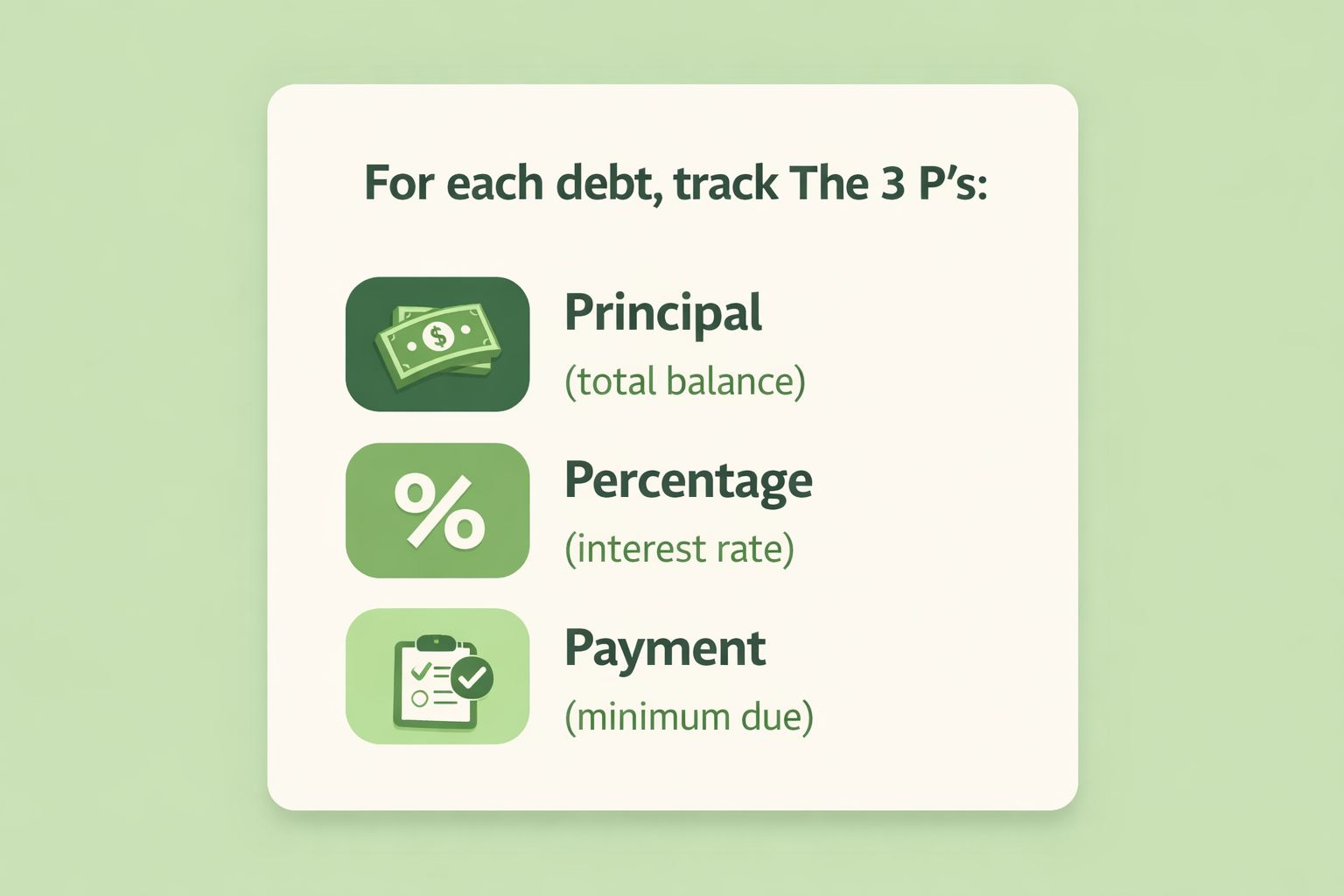
The 3 P’s of Debt
Most people avoid this step because it’s uncomfortable. But the number doesn’t get smaller because you ignore it. It just gets more expensive.
Also pull your credit report, there is a real chance something is on there you forgot about.
2. Choose your method and commit to it
Two approaches. Both work. Pick the one that fits how you are wired.
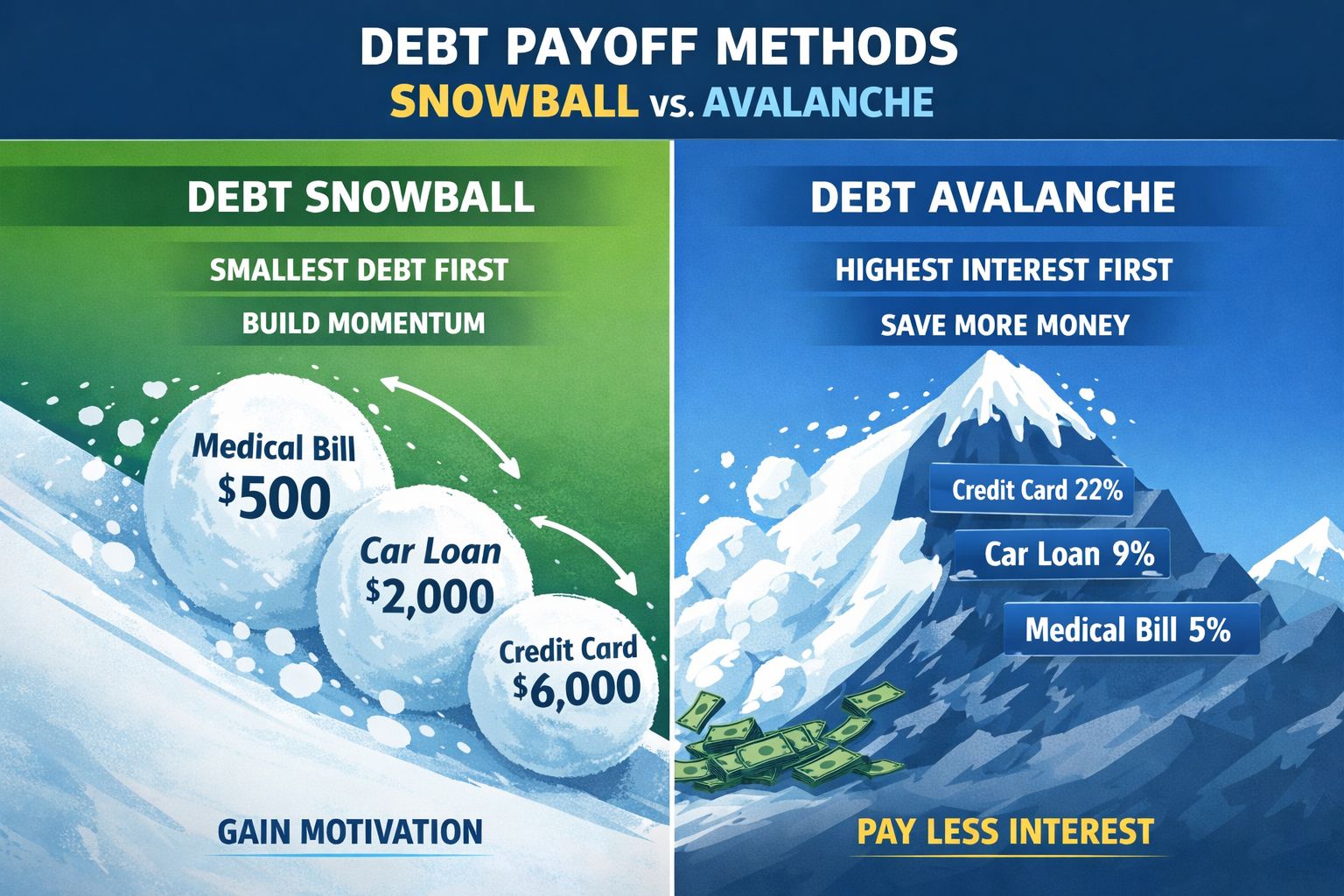
Debt snowball: pay minimums on everything, then throw every extra dollar at your smallest balance first. Once it is gone, roll that payment into the next one. Repeat until everything is cleared.
Debt avalanche: same idea but you target the highest interest rate first instead of the smallest balance.
Personal finance is 80% behavior and 20% math.
If you need early wins to stay consistent, go snowball. If you want to minimize what you pay overall, go avalanche.
The best method is the one you will not quit.
Use this DEBT PAYOFF CALCULATOR to see exactly how both methods play out with your actual numbers.
One bonus move: call your credit card company and ask them to lower your interest rate. Tell them you are paying off debt aggressively and other cards are offering better rates. It does not always work. When it does, it can save you thousands.
3. Remove willpower from the equation
Willpower is not a strategy. It runs out.
Do this:
Set up automatic minimum payments on all debts
Send every extra dollar to your current target debt
(smallest balance for snowball, highest interest for avalanche)
Schedule it right after payday before the money has time to sit in your account and feel “available.”
You will never miss money you never saw.
4. Free up and increase your cash flow
You probably do not need to earn more yet. You just need to stop the quiet drains first.
Start here:
Subscriptions you don’t use
Insurance you haven’t renegotiated in years
Food delivery and impulse spending
Most people find $200–$500/month just by cleaning this up. Cut or reduce anything that doesn’t actually improve your life.
Then increase your income:
Freelancing (use skills you already have)
Side gigs (short-term, flexible)
Selling unused items (fastest way to get cash now)
Every dollar you redirect buys back your freedom faster.
5. Avoid traps and stay out of debt
This is where most people get derailed right when they are making progress.
TRAP #1 Minimum payments only. This feels safe but it’s the slowest path possible. You stay in debt for years and pay back multiple times what you borrowed.
TRAP #2 Same spending habits. Paying debt while still making impulse purchases on the same card is not a debt payoff plan. It is a treadmill. You’re working hard but going nowhere.
TRAP #3 Debt consolidation promises. There are legitimate options. But if someone is promising to erase your debt fast with no effort, that is not a solution. That is the next trap.
Now, how you stay out of debt:
Build your buffer. Start with $1,000 → grow it to 3–6 months of expenses. This is what protects you when life happens.
Set a simple credit card rule. If you can’t pay it in full each month, stop using it. Points are not worth high interest.
Give your money a better direction. Start putting money toward investing or saving. If you don’t give your money a purpose.
Getting out of debt doesn’t come from one big decision.
It comes from small systems that run every day.
And over time, those systems get you out, and keep you out.
Which step are you starting with this week? Hit reply
I read every response :)
Where are you right now in your financial journey? |
💬Quote of the Week
Just believe in yourself. Even if you don’t, just pretend that you do and at some point, you will.
📉 Market Recap
Check out some of the biggest stories shaking up money, markets, and momentum this week.
👉Traders placed a $950M bet on oil dropping
Investors sold massive oil futures hours before the U.S.–Iran ceasefire was announced.
Wallet impact: Big market moves can happen fast which means the prices you pay (like fuel and goods) can change quickly too.
👉Meta launches new AI model “Muse Spark”
The model can analyze images, answer complex questions, and even compare products based on content and trends.
Wallet impact: This could make spending easier (and more tempting), so being intentional with money becomes even more important.
👉Treasury Secretary Bessent pushes Congress to pass crypto bill
He’s urging lawmakers to create clear rules for digital assets through the proposed “Clarity Act.”
Wallet impact: Clear rules could make crypto safer and easier to use but may also limit certain features like high-yield rewards.
👉U.S. office buildings are selling at massive discounts
Some office towers are being sold for up to 90-95% less than their previous value.
Wallet impact: Long-term changes in how and where people work could reshape cities and local economies.
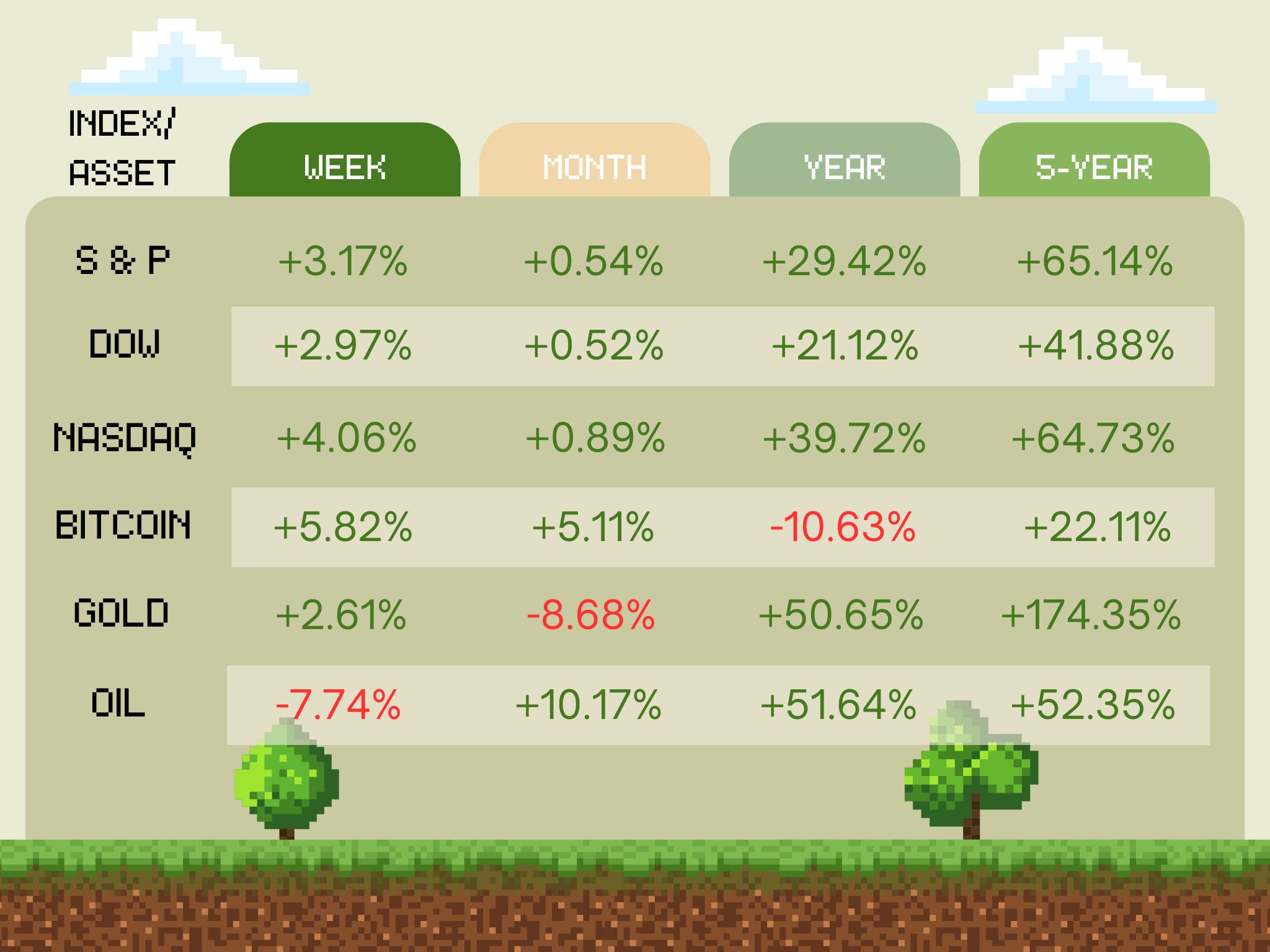
As of 04/10/2026
I want your honest take! Are you enjoying the market recap? |
👀 In Case You Missed It
Starting from $0 can feel overwhelming. If I had to start over today, this is the exact approach I’d take.
🌱3 more ways I can help build your wealth
Budget Template + Net Worth Tracker: Most budgeting apps either baby you or confuse you. This template does neither. It gives you clarity in under 10 seconds a day. I use it to track spending, savings, and net worth in one place.
My Youtube Channel: If you prefer learning visually, I walk through real-life examples, portfolio breakdowns, and beginner-friendly concepts step by step so they actually make sense.
Quick Survey (Help Me Help You): The more I understand you, the better I can guide you. It only takes 2 minutes to fill this out so I can help you create structure and build wealth with confidence.
See y’all next week 🫡
Angelo Castillo
How did you like today's newsletter? |
Disclaimer: The content of this newsletter is for informational purposes only and should not be construed as investment, legal, or tax advice. The views and opinions expressed herein are solely those of the author and do not necessarily reflect the views of any business, employer, or other entity. Investing involves risks, including the potential loss of principal. Past performance does not guarantee future results. Readers are advised to conduct their own research and consult with qualified professionals before making any investment, legal, or financial decisions. The information provided is believed to be accurate but cannot be guaranteed. The author and publisher disclaim any liability for actions taken based on the content of this newsletter. This newsletter is not an offer to buy or sell any security. By subscribing or continuing to read this newsletter, you acknowledge and accept these terms and conditions.
Some of the links are my affiliate links. If you click on these links and sign up/purchase something, I may earn a small commission at no additional cost to you. This helps support me and allows me to continue creating content for you. I only promote products and services I genuinely believe in. Thank you for your support!