- New Money
- Posts
- Evolved
Evolved
The silent gap between education and income. This is how I closed it.

Angelo Castillo
March 02, 2026
Happy Monday,
Angelo here! Welcome to New Money, where we go over weekly tips to help you build your wealth, one dollar at a time.
P.S. I’ve been working on a secret project for you, someone who doesn’t just want generic money advice and doesn’t wan’t to be left behind. Can't reveal it yet, but your answers in this 90-second survey literally determine what it becomes and what problems we will focus in. I’d love your help, you in? [click here!]
Today’s edition:
Why the old playbook stopped working
The leverage shift that changes everything
Meta expands, Hollywood bidding heats up, and more…
Read time: 3 min 15 seconds
🍎Wealth Tip of the Week
They told us education was the “safest path”.
But they forgot to mention the path changed.
Don’t get me wrong. I’m not anti-college. I have a degree myself. I worked for it and I'm proud of it and I’d still tell you to get educated.
But here's what's different now: Tuition has skyrocketed while wages have barely moved, underemployment remains high, and layoffs are no longer surprising.

Unemployment Rates for Recent College Graduates vs Other Groups - New York Fed
This doesn't mean education failed you. It just means education is only phase one, and the real leverage gets built after.
Let’s break down the exact system I used to move from survival mode to real financial control right after graduation.
1. Build Skills That Actually Pay
Your degree got you in the door, and that matters. But long-term income depends on what you can actually do today.
After graduating, I realized something quickly: No one was paying me for what I studied. They were paying me for the problems I could solve.
So instead of chasing more credentials, I focused on practical skills that increase earning power immediately.
Let’s keep it simple:
AI leverage. You don’t need to become technical. You need to become efficient. Learn how to use tools like Claude to outline ideas, summarize information, draft emails, and automate repetitive tasks.
Communication. Writing clearly, explaining complex ideas simply, and presenting thoughts in a way people understand are rare skills. These build trust. And trust increases opportunity.
Money fundamentals. You don’t need to become a financial expert. You need to understand how money actually grows. Learn how compound interest works. Understand what a Roth IRA is. Know why index funds quietly build wealth over decades.
Your degree still matters. But your skills determine how far you go.
2. Create Multiple Income Streams
You can’t build your entire life around one paycheck anymore. One company decision and you’re adjusting your entire lifestyle overnight.
Research on high earners shows that many build multiple income streams over time. You don’t need seven. But you do need more than one.
Start with three layers:
Your primary job. This is your foundation. Do not quit impulsively to “follow your passion.” Stability funds flexibility. Use your job to cover expenses, build savings, and invest consistently.
Side income. This is where optionality begins. Freelance your skills. Offer a service. Create digital products. Start small and realistic. An extra $500 per month becomes $6,000 per year. That alone can build an emergency fund within a year.
Automated investments. This is non-negotiable. This is where long-term wealth actually compounds. Small, consistent investments made early can outperform larger amounts started later. Use this compound interest calculator and run the numbers for yourself.
If you want to see more income streams I use, watch this video.
3. Learn to Budget
You can't build wealth if you don't know where your money goes.
Most people have no idea how much they spend on subscriptions, food, random stuff. Then they wonder why there’s never as much left as they expected.
A budget isn't about restricting yourself. When you know your numbers, you make intentional decisions.
Start tracking 3 things:
Income - What's coming in every month.
Fixed expenses - Rent, utilities, subscriptions. The stuff that doesn't change.
Variable expenses - Food, entertainment, random purchases. The stuff that fluctuates.
But here's the problem: Most budgeting apps either baby you or confuse you.
So I created a simple template that gives me clarity in 10 seconds a day.
It tracks everything automatically:
Simple income and expense logging
Shows me instantly if I'm over budget
Catches subscriptions I forgot about
Visualizes my net worth so I can see if I'm actually moving forward
I use the 50/30/20 rule as a baseline, 50% needs, 30% wants, 20% savings, but you can customize it to whatever fits your life.
Check your dashboard whenever you want and know exactly where you stand. That's it.

4. Read Books That Change How You Think
Reading rewires how you think about problems, resilience, and building wealth.
A recent JPMorgan survey of over 100 billionaires with $500 billion+ combined net worth found that reading topped their list of success habits.
Here are five books that shaped how I approach money, work, and life:
"The Almanac of Naval Ravikant" - Clear principles on leverage and value creation. Will rewire how you think about work. Naval breaks down how to build wealth without sacrificing your life.
"Can't Hurt Me" by David Goggins - When you think you're done, you're at 40%. This isn't comfortable. It's a kick in the teeth. You'll need it when things get hard and you want to quit.
"Hustle Harder, Hustle Smarter" by Curtis Jackson (50 Cent) - Strategy, not just hustle. How to move in business. How to spot opportunities and turn them into empires. Practical lessons from someone who actually built one.
"The Alchemist" by Paulo Coelho - About following your purpose when the path isn't clear. Short, powerful. Read it when you're doubting yourself or feeling lost.
"The Power of Now" by Eckhart Tolle - You can't build anything if you're constantly anxious about the future. This teaches you how to actually be present. Will change how you experience daily stress.
By the end, you’ll think longer term, act with more discipline, and understand leverage at a deeper level. That combination compounds just like money does.
Education was phase one. What you do next is phase two.
So here’s my question for you:
Which one are you missing right now — skills, income streams, budgeting, or mindset?
The old playbook expired. Now you write your own.
💬Quote of the Week
People do not decide their futures, they decide their habits and their habits decide their futures.
📉 Market Recap
Check out some of the biggest stories shaking up money, markets, and momentum this week.
Perplexity launches multi-model AI “Computer” super agent
Meta signs up to a $100B deal with AMD to power AI data centers
Paramount Skydance raises bid for Warner Bros, putting Netflix deal at risk
Hims & Hers posts strong earnings as customer growth continues
US-Israel strikes Iran as Supreme Leader Khamenei killed in joint operation; Tehran retaliates across region with missile strikes
I want your honest take! Are you enjoying the market recap? |
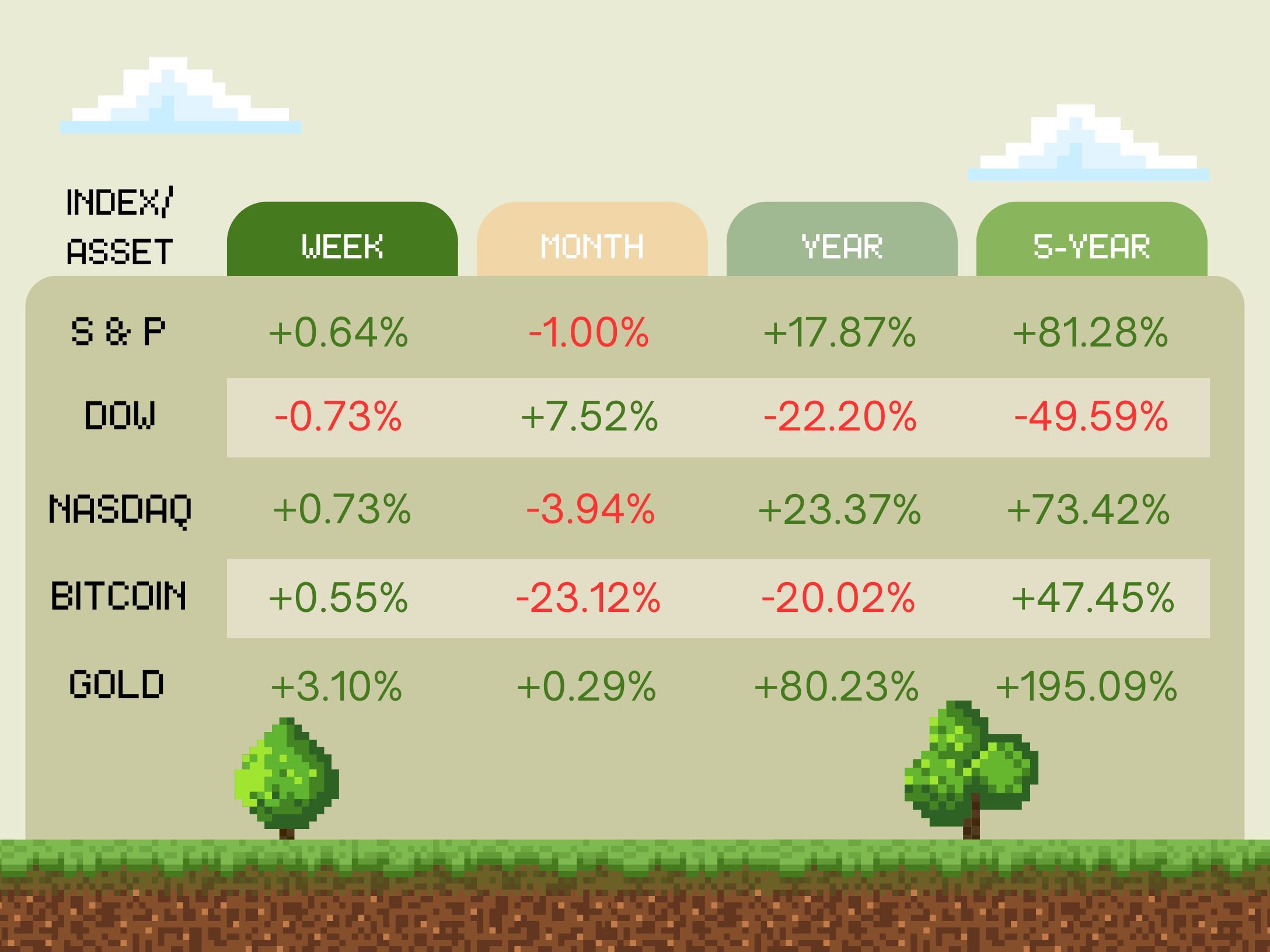
As of 02/27/2026
👀 In Case You Missed It
ETFs are simple. But simple doesn’t mean automatic wealth. Here are 10 things to know before you start buying them.
🌱3 more ways I can help build your wealth
Budget Template + Net Worth Tracker: Most budgeting apps either baby you or confuse you. This template does neither. It gives you clarity in under 10 seconds a day. I use it to track spending, savings, and net worth in one place.
My Youtube Channel: If you prefer learning visually, I walk through real-life examples, portfolio breakdowns, and beginner-friendly concepts step by step so they actually make sense.
Quick Survey (Help Me Help You): The more I understand you, the better I can guide you. It only takes 2 minutes to fill this out so I can help you create structure and build wealth with confidence.
How did you like today's newsletter? |
Disclaimer: The content of this newsletter is for informational purposes only and should not be construed as investment, legal, or tax advice. The views and opinions expressed herein are solely those of the author and do not necessarily reflect the views of any business, employer, or other entity. Investing involves risks, including the potential loss of principal. Past performance does not guarantee future results. Readers are advised to conduct their own research and consult with qualified professionals before making any investment, legal, or financial decisions. The information provided is believed to be accurate but cannot be guaranteed. The author and publisher disclaim any liability for actions taken based on the content of this newsletter. This newsletter is not an offer to buy or sell any security. By subscribing or continuing to read this newsletter, you acknowledge and accept these terms and conditions.
Some of the links are my affiliate links. If you click on these links and sign up/purchase something, I may earn a small commission at no additional cost to you. This helps support me and allows me to continue creating content for you. I only promote products and services I genuinely believe in. Thank you for your support!